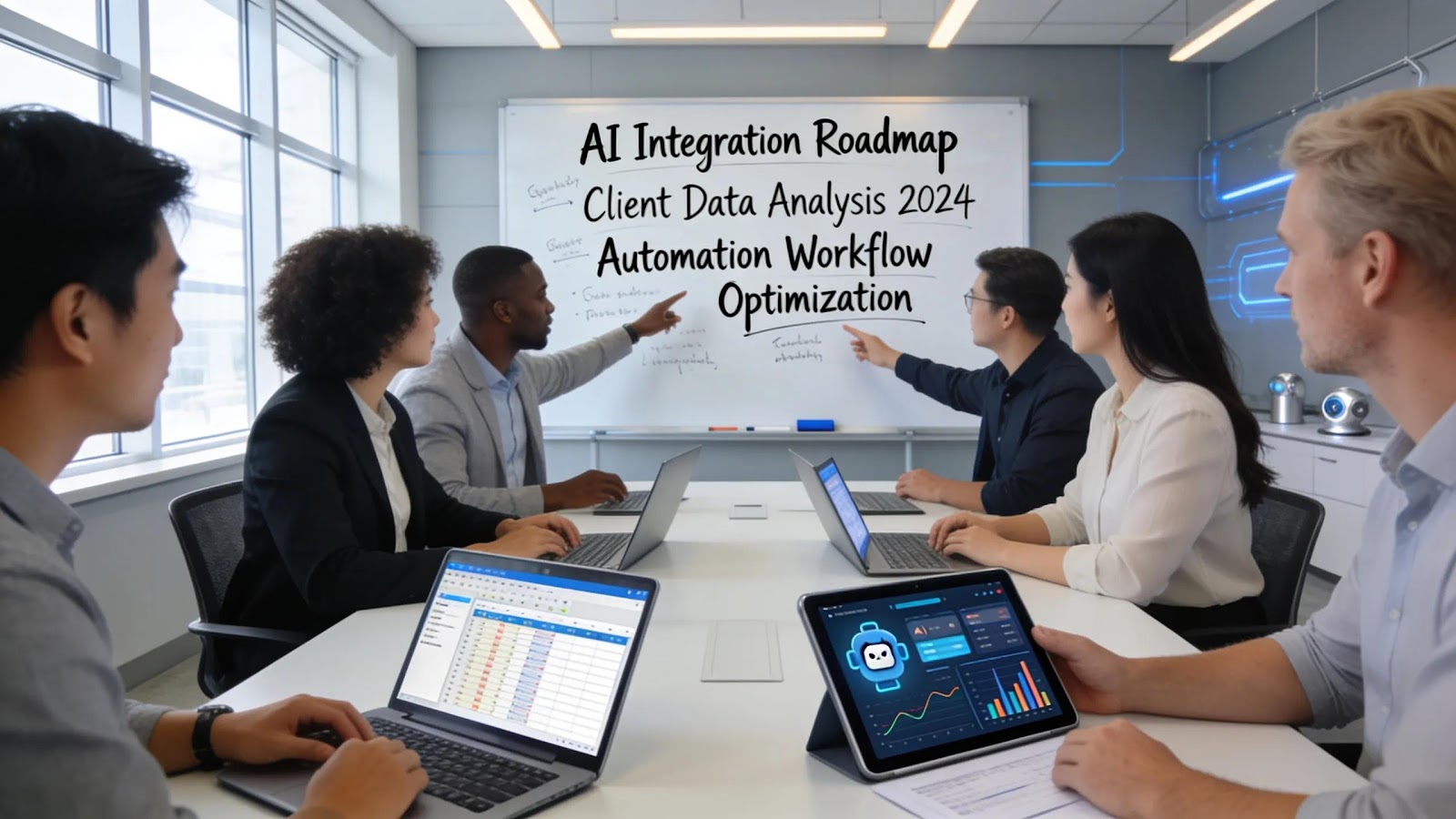
Operating software forms the backbone of modern business infrastructure, characterized by its capacity to integrate artificial intelligence (AI) and enhance operational efficiency. This article explores the essence of operating software, its critical role in helping organizations streamline workflows, and the advantages it delivers. The discussion covers fundamental definitions, the workings of Enterprise Operating Systems (EOS), how AI enhances this framework, and the role of OTP in the meeting software landscape for EOS teams.
What Defines Operating Software in Contemporary Business Environments?
Operating software is a sophisticated framework that encompasses a variety of applications designed to manage, control, and optimize business operations. At its core, it serves as a facilitator of seamless communication and coordination among different organizational functions. By integrating AI capabilities, operating software becomes more than just a tool; it transforms into an intelligent partner that adapts to dynamic business needs. Understanding this relationship is crucial as businesses seek to enhance their productivity and operational efficiency in a technology-driven market.
This paper presents an up-to-date survey of AI-driven frameworks, covering the entire workflow for building, testing, and deployment of commonly used operating systems. "A Review on AI-Assisted Automation Process for OS Building and Deployment," 2025
How Do Enterprise Operating Systems Support Organizational Workflows?
Enterprise Operating Systems (EOS) greatly contribute to streamlining organizational workflows by capturing and structuring operational knowledge effectively. They eliminate inefficiencies that often hinder progress, creating environments conducive to continuous improvement. By taking a centralized approach, EOS facilitates better resource allocation and task management. For instance, companies like Sneeze It employ AI agents with well-defined roles to navigate and optimize their workflows, demonstrating how these systems can enhance overall efficiency.
How Are AI Agents Integrated as Full Team Members in Workplaces?
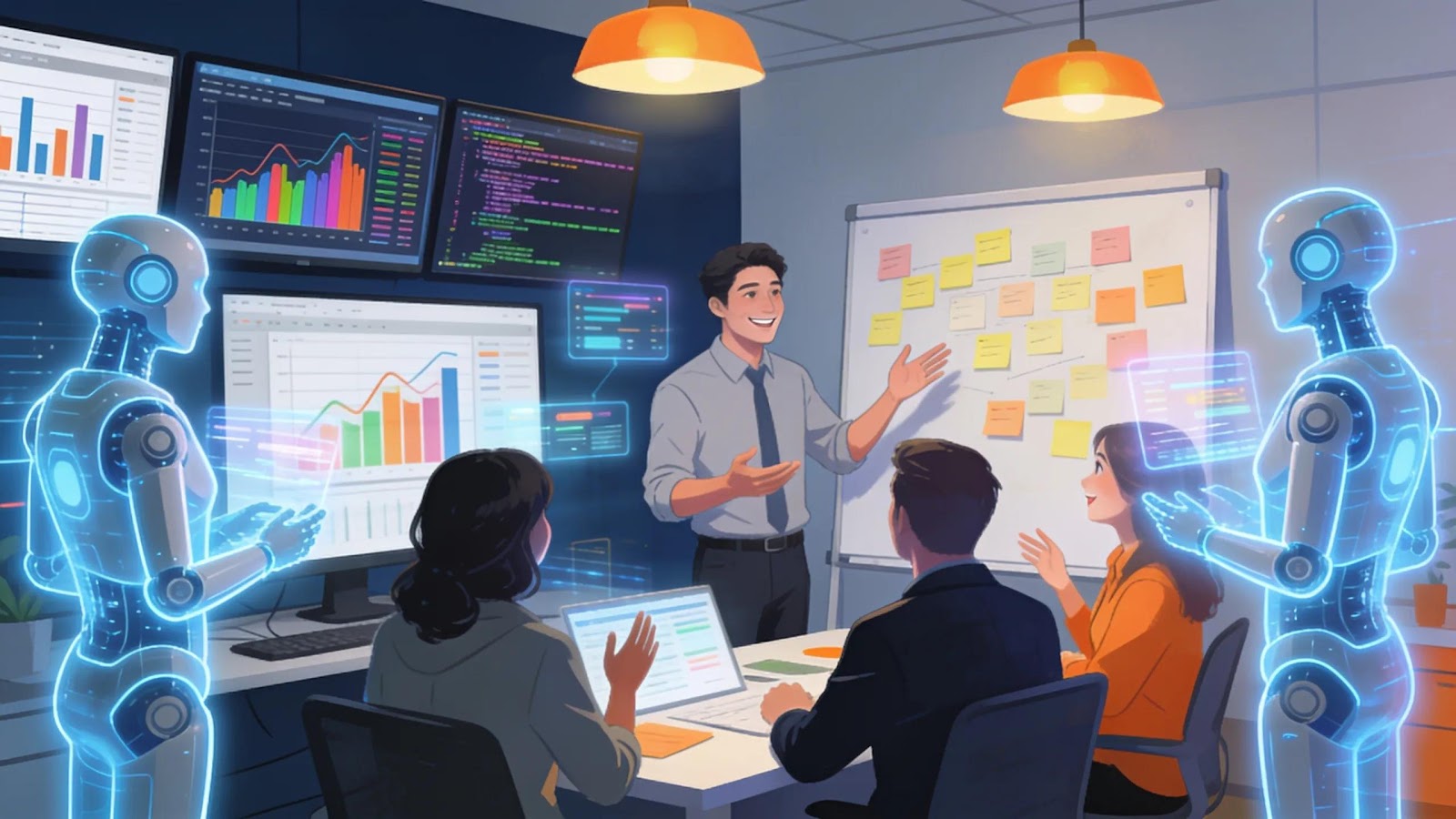
The integration of AI agents into workplace environments marks a significant shift in how teams operate. Rather than functioning merely as automation tools, AI agents are now collaborators that enhance human capabilities and decision-making processes. This paradigm shift allows for a more cohesive work environment where both human and AI elements contribute toward common goals.
Roles of AI Agents
AI agents undertake various roles within organizations, performing tasks that range from operational management to data analysis. Their versatility allows them to coordinate complex projects, support decision-making, and handle routine tasks such as scheduling. By having defined responsibilities, AI agents support human employees, alleviating their workloads and enabling them to focus on more strategic initiatives.
AI agents are revolutionizing business workflows, shifting from linear, rule-based processes to dynamic, adaptive systems. These agents leverage advanced machine learning, natural language processing, and contextual decision-making to optimize and automate tasks, ranging from routine operations to high-stakes decision-making. K. Huang, "AI Agents and Business Workflow," 2025
Benefits to Workflow
The presence of AI agents significantly enhances workflow efficiency. By automating repetitive tasks, these agents increase speed and accuracy in day-to-day operations while improving overall coordination among teams. This automation not only leads to time savings but also establishes a scalable framework that can adapt to expanding business demands as companies grow.
Technologies Facilitating Integration
The successful integration of AI agents within workflows relies heavily on advanced technologies that support their functionality. Organizational Operating Systems play a critical role here. They streamline the management and deployment of AI agents, utilizing runtime platforms that facilitate their operations in real time. This technological backbone ensures that AI can work seamlessly alongside human team members, driving greater personalization and effectiveness in business processes.
Open-source workflow automation tools can operate as AI-driven orchestrators to fuse multi-agent systems into unified automation frameworks. This research delves into the capabilities of n8n and its scalability for enterprise use. P. Venkiteela, "n8n: An open-source workflow automation platform for enterprise integration and AI-driven orchestration," 2025
What Are the Key Features and Benefits of AI-Powered Meeting Tools?
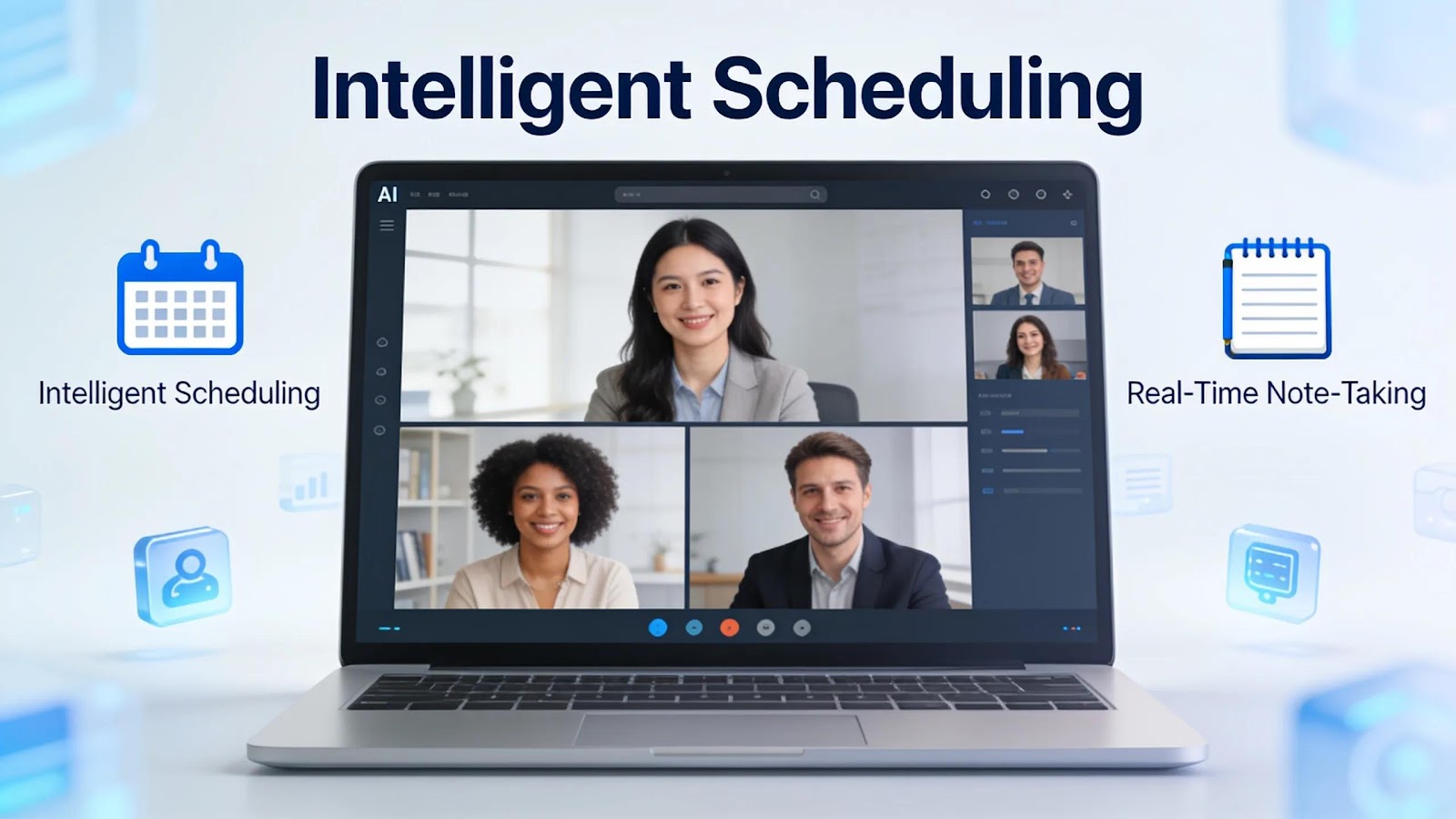
AI-powered meeting tools are transforming the way businesses conduct meetings and collaborate. Their core features include intelligent scheduling, real-time note-taking, and automated action item tracking, which make meetings more productive and structured. By employing these technologies, organizations can expect a significant boost in meeting efficiency and effectiveness.
What Metrics Demonstrate ROI from AI-Driven Meeting Software Adoption?
Organizations utilizing AI-driven meeting software often experience quantifiable benefits. Key metrics include a reduction in meeting durations, which streamlines decision-making processes. Increased productivity metrics further corroborate these benefits, as employees spend less time in unproductive meetings and more time engaging in actual work. Moreover, cost savings over traditional meeting methods provide a compelling argument for adopting AI meeting solutions.
| Feature | Benefit |
|---|---|
| Intelligent scheduling | Reduces time spent on arranging meetings |
| Real-time note-taking | Ensures accurate documentation of discussions |
| Automated action item tracking | Enhances follow-up on decisions and responsibilities |
How Does the OTP Platform Facilitate EOS Teams Using AI Operating Software?
The OTP platform stands out as a solution for teams employing the Entrepreneurial Operating System (EOS). It offers a unified approach to integrate AI with organizational practices, enhancing team collaboration and operational efficiency. By combining AI capabilities with team coordination, the platform enables real-time insights and scorecards that inform decision-making processes.
Use Cases Illustrating OTP's Impact on Business Decision-Making
The implications of using the OTP platform extend beyond mere functionality; they enhance overall effectiveness in business decision-making. For example, it fosters visibility and accountability within workflows, empowering teams with shared operational intelligence. This clarity leads to rapid decision-making capabilities and ensures that organizations remain responsive in dynamic environments.
What Are Emerging Trends and Future Outlooks for AI in Operating Software?
The landscape of operating software is rapidly evolving, particularly with the incorporation of AI technologies. Emerging trends point toward the rise of Agent-as-a-Service models and the development of coordination models akin to a "maestro of agents." These innovations promise a new era of automation and enhanced decision-making.
Which Advances in AI Will Further Transform Business Automation Software?
Future advancements in AI are poised to further revolutionize business automation software. For instance, the emergence of knowledge transfer layers will facilitate smoother transitions between human and machine interactions. This scalability of AI solutions will continue to improve operational efficiency and productivity, enabling businesses to thrive amidst growing complexities.
Run Your Operating Software on OTP
OTP is the operating layer where humans and AI agents share one chart, one scoreboard, and one weekly meeting, with real-time scorecards that inform every decision. Free to start.
EOS® and Entrepreneurial Operating System® are registered trademarks of EOS Worldwide, Inc. OTP is not affiliated with, endorsed by, or sponsored by EOS Worldwide. References are for descriptive and educational purposes only.