Chapter 10
The Organizational Digital Twin
Leaders need a living model of how work actually happens.
Opening premise
Every company has an official version of how work happens.
The org chart.
The process manual.
The quarterly deck.
The meeting notes.
Then there is reality.
The gap is where execution breaks.
Core argument
An Organizational Digital Twin models the real operating system.
Who owns what. Which decisions are made where. Which commitments are open. Which KPIs are drifting. Which agents are watching. Which lessons have changed behavior.
The twin lets leaders inspect the company as it operates, not only as it reports.
It makes operating reality visible.
Executive insight
Most companies discover reality through escalation.
The customer complains. The project slips. The number misses. The leader asks what happened.
The team reconstructs the truth after the fact.
A digital twin changes the timing.
Original framework
The Digital Twin of Work
Together, these maps reveal whether the company is aligned in reality or only in language.
Twin architecture
The twin connects real work signals to a shared operating model.
Digital Twin of Work
MeetingsDecisions and commitments.
SystemsTasks, records, and status.
KPIsTargets, trend, and thresholds.
AgentsWatching and preparing.
HumansJudgment and authority.
LearningChanges to future behavior.
The org chart shows who reports to whom. The digital twin shows how the company works.
01
Visibility
The twin is not surveillance.
SurveillanceWatch people.
VisibilityCatch drift before it becomes damage.
The goal is not to catch people. The goal is to catch the operating system moving out of alignment.
02
Drift
Drift is easiest to fix while it is still small.
LateA missed number forces a reconstruction.
EarlyA pattern triggers review before escalation.
The digital twin helps leadership see movement before it becomes a fire.
Ollie appearance
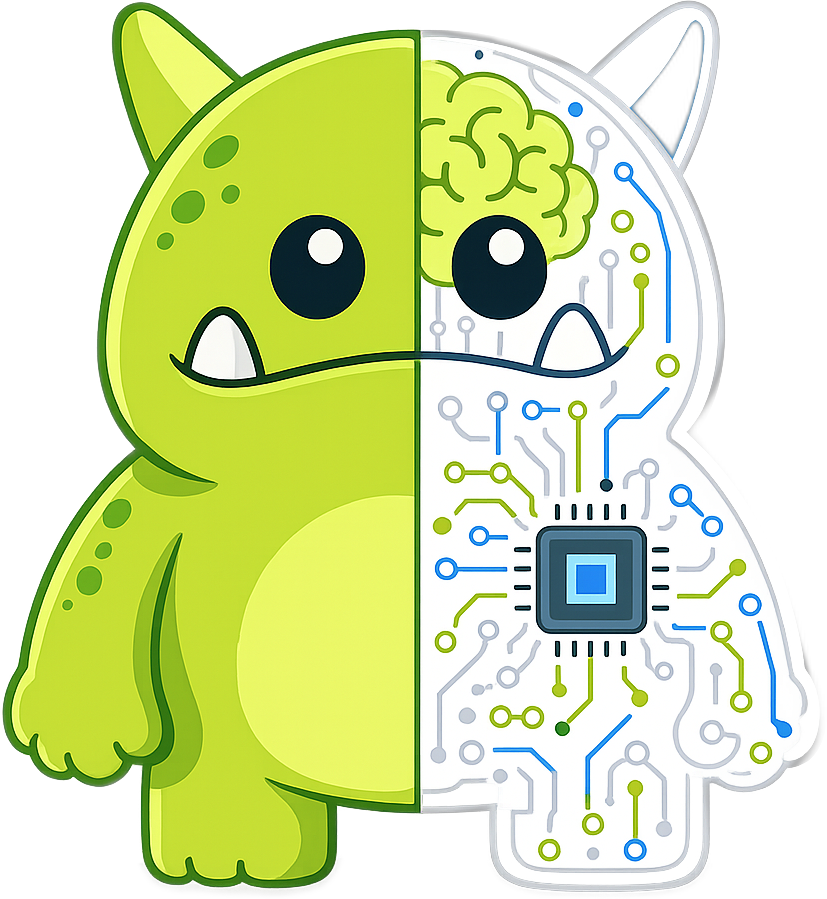
Future Ollie stands between the company and its twin.
Not as controller.
As translator between work signals, leadership judgment, and the operating model.
Future Ollie
Twin viewRoles, decisions, KPIs, learning.
Executive inspection
Use the twin to inspect where work is drifting.
- Ownership is unclear.
- Decisions lack records.
- Commitments lack due dates.
- KPIs lack owners.
- Agents lack authority.
- Lessons never become system changes.
This is organizational visibility.
Practical implication
Leaders already build mental models of the company.
The Intelligent Organization makes the model current and accountable.
Closing
The digital twin shows how the company works.
Not how the deck says it works.
Not how the process manual hoped it would work.
Reality becomes manageable when reality becomes visible.